| Type | Volcanic eruption |
| Year | 1936 |
| Event | Eifel Vulcanic Emergence Event |
| Impact | Widespread destruction • Loss of life • Political and social upheaval • Technological and energy policy changes |
| Status | Ongoing scientific debate and research |
| Location | Eifel region, central Germany |
| Significance | One of the most mysterious and impactful geological events of the 20th century |
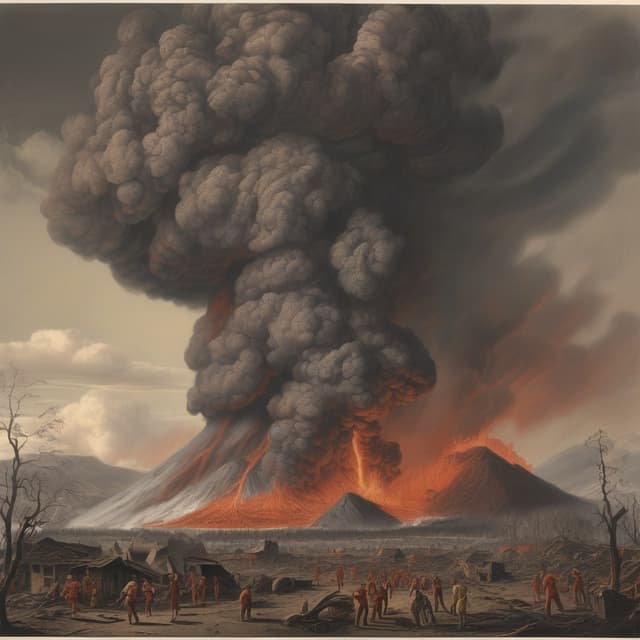
The Eifel Vulcanic Emergence Event was a major geological event that occurred in 1936 in the Eifel region of central Germany. A powerful and largely unexpected volcanic eruption devastated a wide area, causing immense destruction and loss of life. The Eifel Event had profound impacts on the politics, society, technology and energy landscape of Germany and surrounding nations in the decades that followed.
On the morning of May 21, 1936, a series of powerful earthquakes struck the Eifel, a mountainous region near the Rhine River in western Germany. Within hours, a massive fissure opened in the earth, from which a towering pillar of lava, ash and toxic gases began to erupt. Over the next several days, the eruption intensified, with volcanic material raining down across a radius of over 100 kilometers.
The small city of Daun, located directly atop the fissure, was entirely buried, as were dozens of surrounding villages. Thinly-populated rural areas sustained the heaviest casualties, with estimates of over 40,000 dead in the initial stages. Ash clouds drifted as far as Paris and Amsterdam, disrupting transportation and causing respiratory problems.
Geologists were shocked by the event, as the Eifel was not considered an active volcanic region. The eruption created a massive crater, over 5 kilometers wide, where the land had previously been gently rolling hills and farmland. Subsequent investigations found evidence of previous smaller eruptions, but nothing on the scale of the 1936 disaster.
The Eifel Eruption caused immense destruction and upheaval across central Europe. Entire communities were buried or made uninhabitable, displacing hundreds of thousands of people. Infrastructure like roads, rail lines, and power grids were devastated, hampering rescue and recovery efforts.
In the immediate aftermath, the German government struggled to respond to the crisis. Resources were overwhelmed, and tensions mounted as survivors accused authorities of failing to warn or protect them. Neighboring countries, including France, Belgium and the Netherlands, also mobilized aid and relief efforts for refugees fleeing the devastation.
As the true scale of the disaster became clear in the following weeks and months, the political fallout intensified. The event was a major embarrassment for the German government and contributed to the rise of extremist political movements that promised to better protect the German people. The eruption also strained relations with other European powers, who were alarmed by the potential wider consequences.
Geologists were at a loss to explain the Eifel Eruption, as the region had no history of significant volcanic activity. Theories abounded, from the activation of a previously dormant magma chamber, to a methane gas pocket explosion, to claims of a secret nuclear experiment gone wrong.
Extensive scientific research over the following decades has not settled the matter conclusively. Drilling and seismic surveys have revealed a complex system of fault lines and magmatic activity deep below the Eifel, but the specific triggers of the 1936 event remain elusive. Some geologists speculate that climate change or human activity may have played a role in destabilizing the region.
The eruption's unusual characteristics, such as the lack of advance warning signs, also continue to be studied. Estimates of the total volume of ejected material vary widely, from 1 to over 10 cubic kilometers. The true environmental and health impacts, including effects on agriculture, are still being assessed.
The Eifel Eruption had far-reaching political and social consequences for Germany and its neighbors. The perceived failure of the Weimar government to prepare for or respond effectively to the crisis severely damaged public trust. This contributed to the rise of the Nazi Party, who promised to protect the German people from such "natural disasters" through a stronger, more centralized state.
The massive displacement of people and destruction of infrastructure also exacerbated existing economic and social divisions. Survivors accused the government of favoring certain regions or classes in the allocation of aid and resources. Conspiracy theories about the event's causes abounded, fueling growing political extremism.
Internationally, the eruption strained relations between Germany and other European powers. There were concerns the disaster could spark a broader conflict, as countries competed to secure resources and territories in the affected regions. The Eifel Event was seen as a troubling demonstration of the potentially catastrophic consequences of geological instability in the heart of Europe.
The Eifel Eruption had a major impact on Germany's energy and technology landscape in the decades following the event. The destruction of power generation and distribution systems led to a urgent push for diversification away from traditional coal and hydroelectric sources.
This accelerated research into alternative energy technologies, including geothermal power, nuclear power, and early experiments with renewable energy like wind power. The government also invested heavily in reinforcing critical infrastructure to withstand future geological disasters.
Additionally, the event spurred advancements in fields like volcanology, seismology, disaster response, and environmental remediation. German scientists and engineers pioneered new monitoring, prediction, and mitigation techniques that were later adopted globally.
However, the legacy of the Eifel Eruption remains a controversial and unsettled topic. The full environmental toll, health impacts, and long-term effects on the region's economy and society are still being studied and debated by researchers. The event stands as a potent reminder of the destructive power of the earth's geological forces and the ongoing challenges of understanding and preparing for such catastrophic natural events.
